

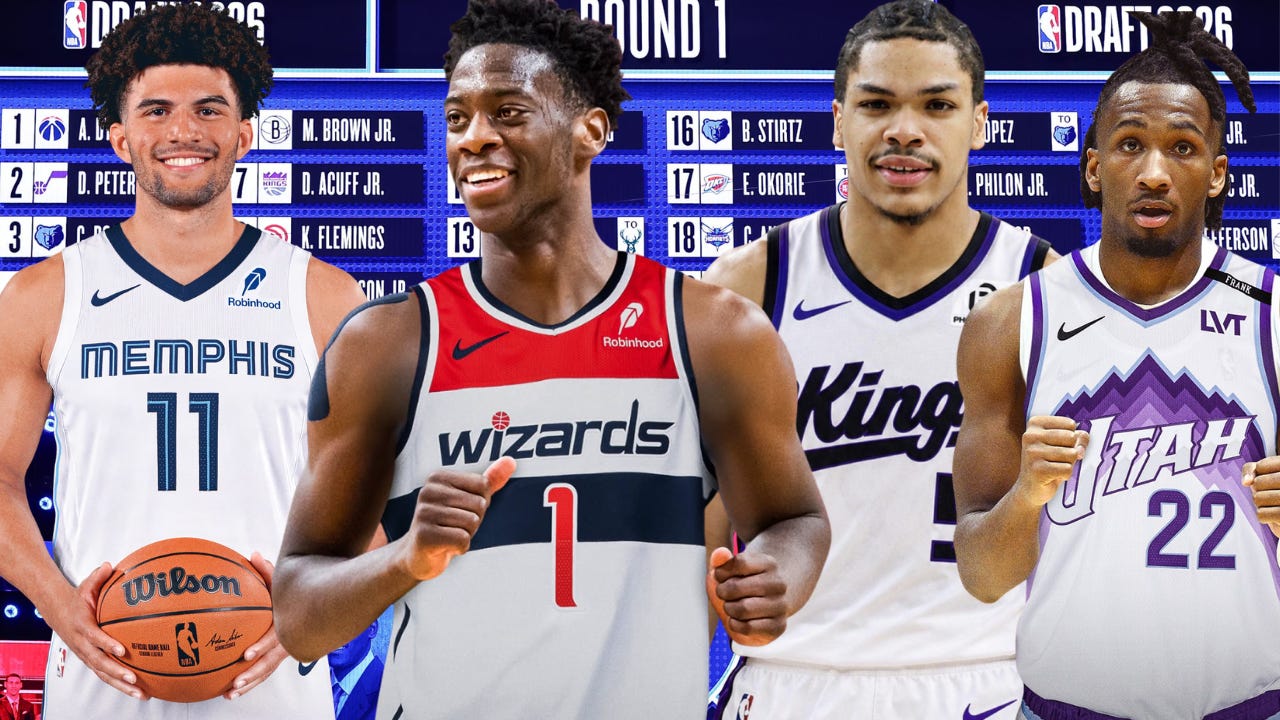
The 2026 cycle, coming to an end, is bittersweet.
In the past year, I’ve gained over 1000 followers on Twitter and hundreds of subscribers to my Substack. My work this cycle has reached hundreds of thousands of viewers, and I’ve appeared on multiple podcasts. I greatly appreciate everyone who has taken a second to engage with my work as I document my analysis of the game that I love so dearly.
This year truly has been one of the best of my life, and I have enjoyed every moment discussing these prospects, building relationships and connections, and hopefully making the space better. I can’t wait to see what is next for me.
Even with clear first-round guys such as Mo Krivas, Patrick Ngongba, Flory Budinga, Tyler Tanner, and Braylon Mullins returning to school, I believe this draft has the most talent in the top 20 since I began publicly scouting in 2024. I wasn’t able to complete a full big board and draft notes in time (a new internship I love is keeping me busy), but hopefully this body of work can explain my thoughts on many of the premier prospects in this class.
Below, I grade and analyze every player and pick in the first round. For most of the names, you can find some work that I’ve done on said player throughout the year.
Whether you Love my takes or hate them, feel free to let me know, and please consider subscribing to read my analysis.
Enjoy!
1. Washington Wizards - AJ Dybantsa
Grade: A+
AJ Dybantsa just completed one of the best slashing (and overall scoring) seasons that we’ve ever seen from a freshman. He ended the year finishing 72 percent at the rim while creating nearly 80% of his makes and 84% of his two-point makes.
He is one of 21 high-major freshmen to dunk the ball at least forty times, finish 70 percent or better at the rim, and shoot forty percent or better on non-rim twos. The list features Zion, Dybantsa, and a bunch of big men who didn’t self-create nearly to the level he did.
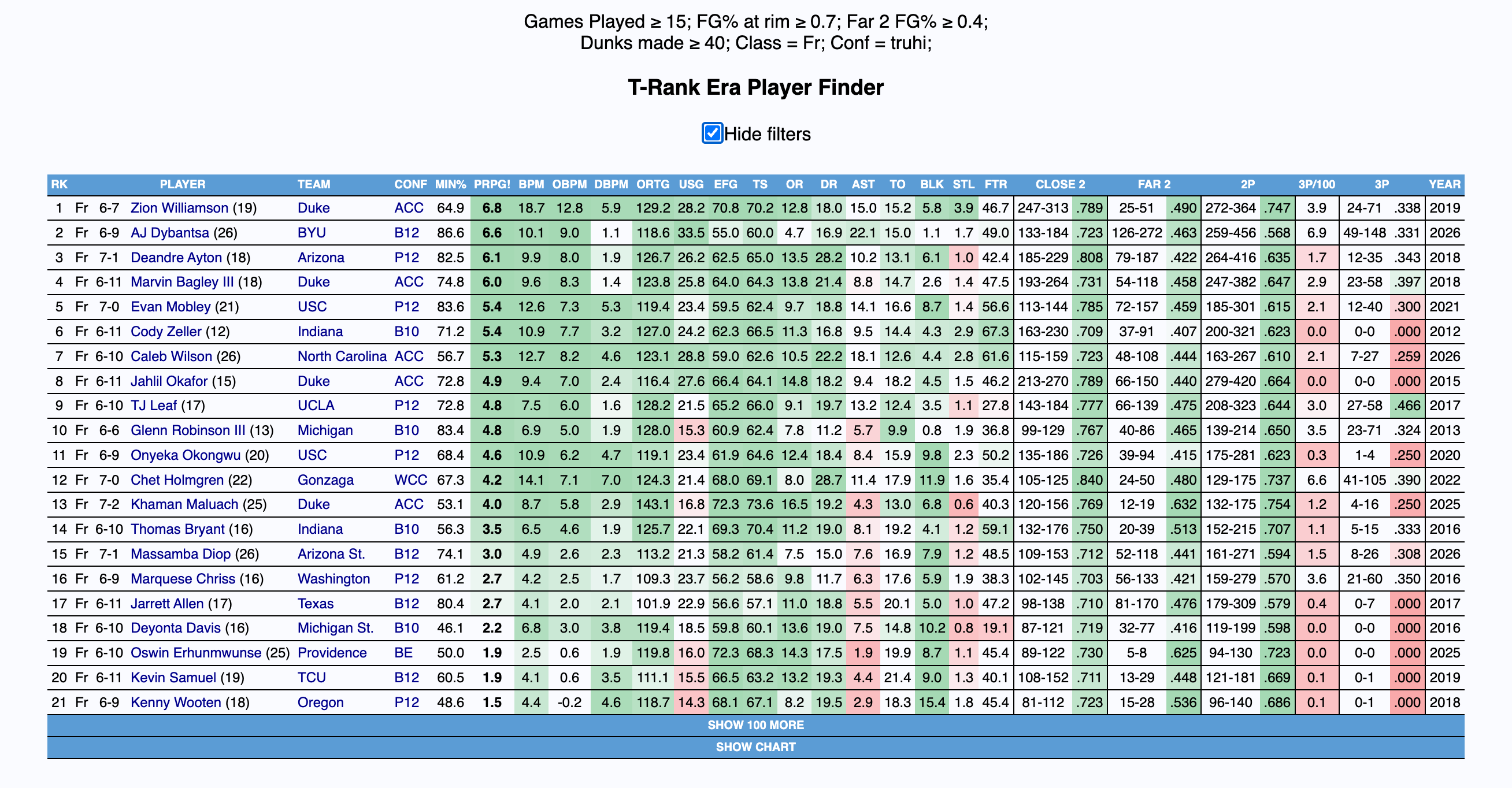
His scoring resilience, ability to handle extremely heavy usage, limit turnovers, and push the pace in transition could lead to immense offensive impact in the NBA, especially if he can learn to balance his scoring and playmaking more effectively.
It’s a work in progress, and he needs to be more willing, but I’m higher on his passing than most. His AST/USG rate (0.66) was poor, but players his size/age who post 22 AST% don’t grow on trees, and he generated 1.5 rim assists per game. That mark ranked 10th among high-major players 6’7 and above.
The Wizards were starving for blue-chip talent, and they grabbed one of the best prospects of the last 15 years at pick one. I am very curious to see how he fits with Trae Young, whom the Wizards just signed to a long-term extension and who has historically dominated the ball for the teams he’s played on.
Before he ever played a second at BYU, I thought Dybantsa had some untapped off-ball scoring potential (because of his mobility and ability to attack closeouts). At prolific, it was mostly BLOB and SLOB plays, but I’m curious to see if he can become a great cutter / close-out attacker playing off of Young.
I’m also curious to see if, in a lesser-usage role, Dybantsa can be more active on defense and on the offensive glass. At BYU, he was a very inactive and low-motor defender, and it showed in his steal and block numbers.
Check the list of players, Dybantsa’s size, who posted sub-two-steal and sub-two-block percentages, and let me know how many of the players turned out to be good defenders. He must improve his screen navigation, motor when chasing ball handlers, and awareness/motor off the ball.
If Dybantsa can improve on that end, the Wizards will have a combination of size, defense, athleticism, and play-finishing that Atlanta dreamed of surrounding Young with.
2. Utah Jazz - Darryn Peterson
Grade: A-
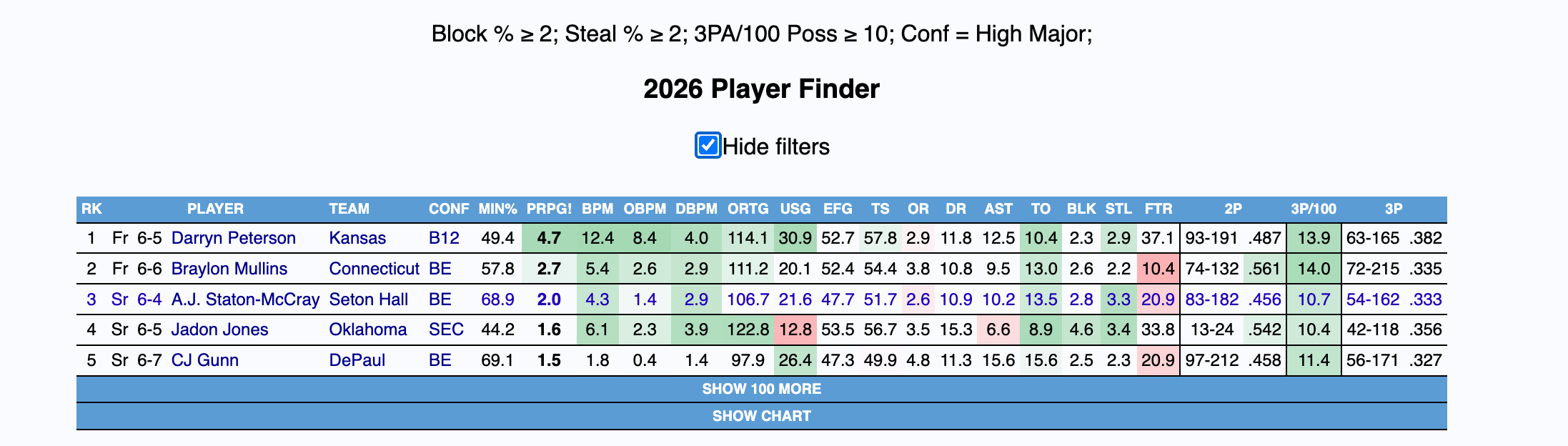
Heading into the college basketball season, the minor concern around Peterson was his three-point volume and effiency. From day one, he passed that test with flying colors and established himself as one of the best off-ball scoring prospects of the last decade. Peterson has an amazing touch, a quick release, and the ability to hit shots from unorthodox positions and angles. He’s truly a nuclear shooter.
While his defensive activity and impact weren’t as potent as they were in high school, he had stretches where he wrecked possessions and still managed 2.9 STL% and 2.5 BLK%. He flashed strong weakside rim protection, enough feel to jump passing lanes, and elite hand-eye coordination to pluck the ball from opponents.
He was one of five players in the country to shoot at least 10 threes per 100 possessions and have steal and block rates over two.
As far as his fit with the Jazz?
Will Hardy is one of the more innovative offensive coaches in the NBA, with a bunch of off-ball actions that Peterson will thrive in, as he did at Kansas. They also needed a shooting guard who can guard as well as Peterson, who will be able to play next to Keyonte George.
But I have my questions.
It’s hard to say if (or how much) injury hurt Peterson’s burst, which could have limited him as an on-ball scorer, playmaker, and defender, or if his game, particularly his on-ball viability, didn’t react well to a rise in competition.
At no point in the season did Peterson consistently get to the rim and put pressure on defenses. He shot 59.7 percent at the rim on very low volume and had a negative rim-to-non-rim ratio. Both numbers were worse in the half-court.
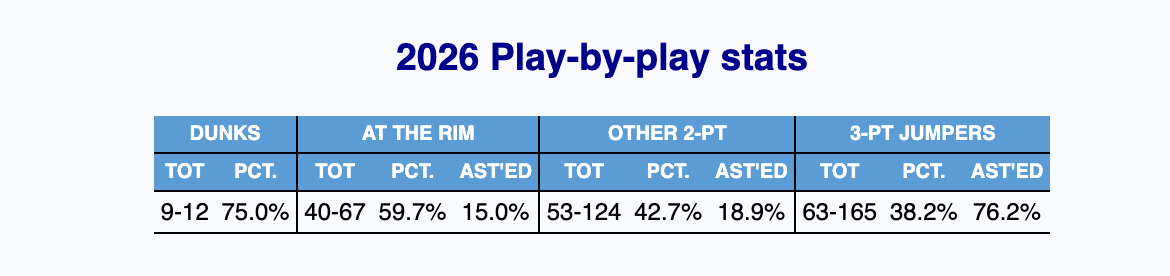
Peterson notably struggled against hard hedges in traps, often turning his hips toward the sideline and dribbling to escape to protect his handle. His surrender to aggressive coverages often led to missed passing/driving windows, and he rarely collapsed defenses.
He didn’t play with many quality ball-handlers, screeners, or play-finishers. Still, others have produced more effectively in worse situations, and Peterson’s passing priors aren’t good enough to duck skepticism.
I think that questions about the way he was used / the quality of his teammates have some merit, but generating 0.745 points per possession in pick-and-roll actions (his most-used playtype), finishing with a 1:1 AST/TO ratio and a 12.5 assist percentage despite 30 percent usage is more than cause for concern — especially for a tier one prospect.
He had the fourth-worst AST ratio of any player in the country with at least 25 percent usage.
For a lineup of George / Peterson / Markkanen / JJJ / Kessler to find any playmaking success, Peterson will have to look more like the player he was in his final season at Prolific, when he was able to collapse defenses at a much higher rate and averaged 5.3 assists and posted a 1.7 AST/TO rate.
3. Memphis Grizzlies - Cameron Boozer
Grade: A+
Boozer has been the most consistent, efficient, versatile, impactful, and dominant player in this draft class over the last four to five years. He just completed arguably the greatest freshman season of the century, and yet he fell to three.
But it’s not a surprise that one of the most analytically sound and forward-thinking teams in the league got the most analytically inclined prospect of the century.
The forward combines brute strength with superhuman processing, great shooting and finishing touch, and a relentless motor to build one of the most potent offensive profiles we’ve seen from a prospect his size/age. He is the only U19 player (6’7 or above) in Bart’s database to carry 25 percent usage while posting a 60 true shooting percentage, 20 assist percentage, and turning the ball over on less than 15 percent of the team’s possessions.
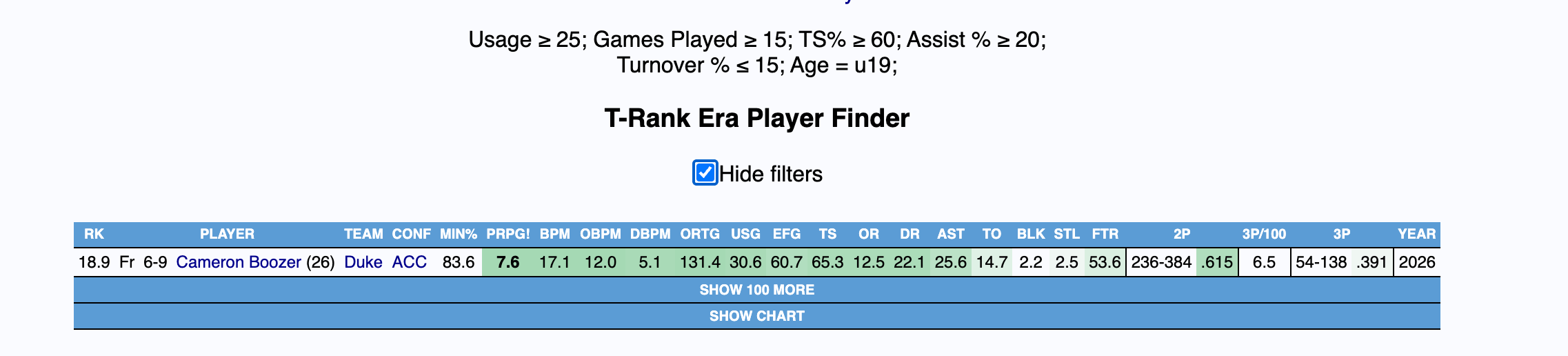
In the last twenty years, Boozer has possessed a level of play-type versatility only matched by his fellow Blue Devil, Cooper Flagg, who just walked away with the Rookie of the Year award this past season.
Nevertheless, even the greatest anomalies have their Achilles’ heel. Amid all of Boozer’s greatness, I am skeptical of his horizontal and vertical athleticism and how it can limit him as a driver and two-point scorer overall. Furthermore, his handle lacks dynamism, and he doesn’t show the ability to access mid-range counters, which could cap his perimeter shot-creation.
A ton of these issues showed up later in the season, where he struggled to score from two (relative to his standards).

It is worth mentioning that he drew a ridiculous number of fouls, shot well from three, and was without his starting center, Ngongba, who helped him tremendously both defensively and offensively.
My broad-stroke solution to the issues above would be to have him raise his three-point rate, which would force defenses to close out stronger and open up his driving more, but his release needs to be sped up a bit to actualize that theory.
His deficiencies as an athlete hurt him defensively as well. Limited lateral quickness and hip mobility make it difficult for him to guard on the perimeter against quicker players, and his lack of vertical athleticism and explosiveness limits his ability to alter shots at the rim, despite routinely being in good position to do so.
Boozer does have excellent hands, a feel for where to be, and he will be a monster on the defensive glass, but I could see him getting exploited defensively come playoff time.

For Boozer to end up as the best player in this class, as I think he can be, it would be best if he lost about 10-15 lbs to maximize his lateral quickness (which will help on both ends) while maintaining a strength advantage over most forwards and wings. Additionally, he’d need to continue to work to make his handle more functional on drives (especially against gap help) and develop mid-range counters to increase his viability as a primary creator at the highest levels.
Ultimately, his combination of size, age, feel, touch, motor, versatility, and scalability is too good to fade despite my concerns. I expect him to continue to grade extremely well in advanced metrics and potentially have the strongest six-factor imprint of any prospect in the class.
Helluva start to the rebuild for Memphis, and I am so interested to see him with some of the other high-end players on the roster.

4. Chicago Bulls - Caleb Wilson
Grade: A
Similar to Dybantsa, Wilson had one of the more dominant finishing seasons in recent memory. He too finished 70+ percent at the rim (49.6 percent assisted), and if Wilson didn’t injure his hand and miss eight games, he was on pace to finish with 92 dunks ( likely more if he plays and helps them beat VCU), which would place him fourth all-time amongst freshmen.
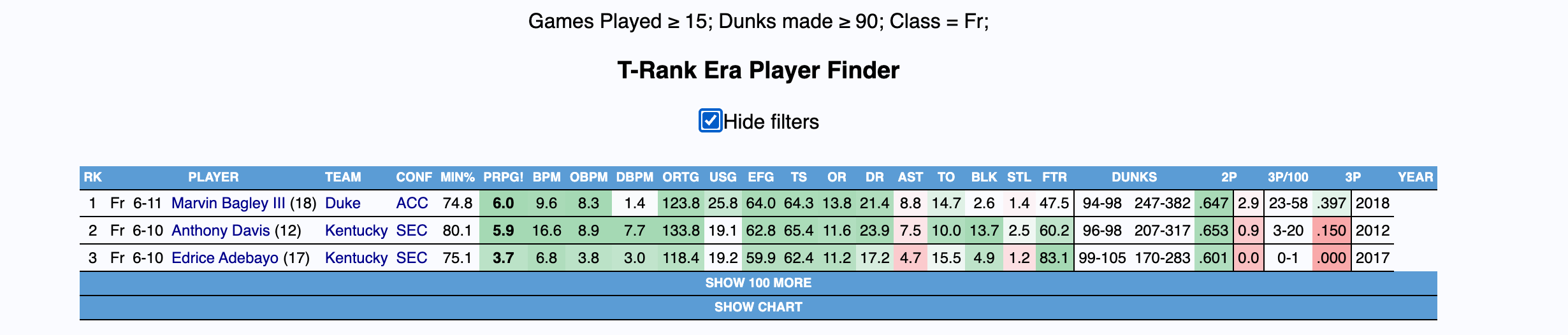
The sell for Wilson is pretty simple: he’s arguably the best athlete in the class and pairs that athleticism with a tenacious motor, quality passing, processing, and transition play.
I think Wilson fits Bryson Graham, the Bulls' new Senior Vice President’s SLAP (size, length, athleticism, and physicality) drafting and team-building philosophy, really well.
Wilson’s defense wasn’t as great as the steal and block numbers say — he frequently was out of position and missed rotations — but he has the potential to be a devastating nail defender alongside Matas Buzelis, who is one of the more underrated help defenders in the league.
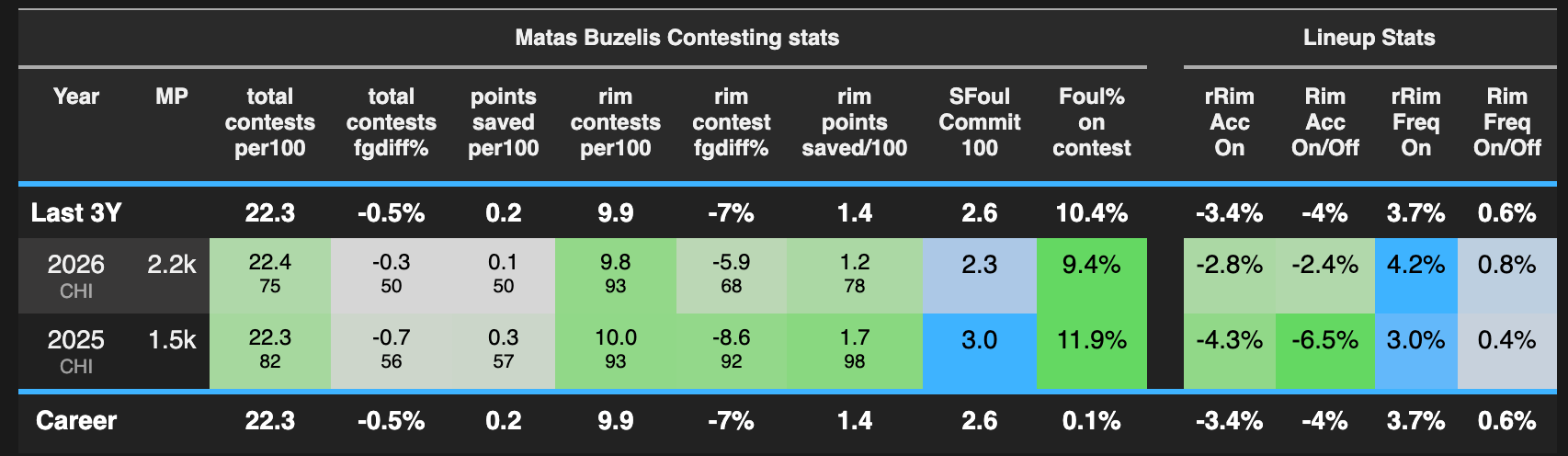
My concern with Wilson is that he’s sort of four, that’s still a bit far behind in terms of his perimeter shooting, handling, and passing on the move, and he’s not big enough on either end to play the five full-time. He’s actually underweight right now compared to the average four.
However, I remain high on him. Because, more than anything, he handled high usage while maintaining great effiency and didn't turn the ball over at a high clip. As I’ve mentioned in my evaluations of Boozer and Dybantsa, I believe that to be the prerequisite for creating bets.
I essentially view Wilson as a player who, at his baseline, provides play-finishing, rebounding, excellent nail-and-helper defense, quality passing, and transition production. Those skills provide value to the Bulls.
If he can refine his handle, get lower on his drives, and add some strength, I think a Pascal Siakam-esque outcome is in the realm of possibilities.


5. Los Angeles Clippers - Keaton Wagler
Grade: B-
Wagler is one of the most unique evaluations in this class. He can dribble, pass, shoot, and process the game at an exceptionally high level. He consistently maximized possessions this season, rarely forcing shots or turning the ball over, and creating efficient offense for himself and his teammates.
Wagler’s combination of three-point volume, offensive rebounding, feel, and free-throw generation is a rare statistical intersection for a perimeter player, and that alone makes him an outlier.
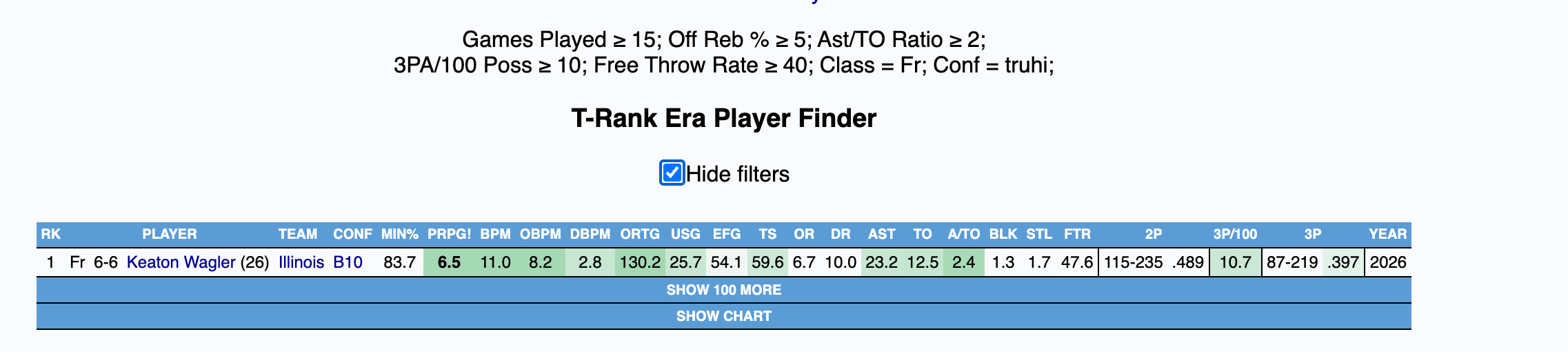
My concerns begin and end with his strength and athleticism, and how they can hinder him on both ends of the floor. The “6’6 with zero dunks” conversation and his one missed attempt made their rounds around social media, but it’s a very real concern, and his lack of burst and inability to create lift hinder him as a two-point scorer. He finished the year shooting 57.5 percent from the rim and 48.9 percent from two. Against quad one opponents (19 games), that figure fell to 44 percent.
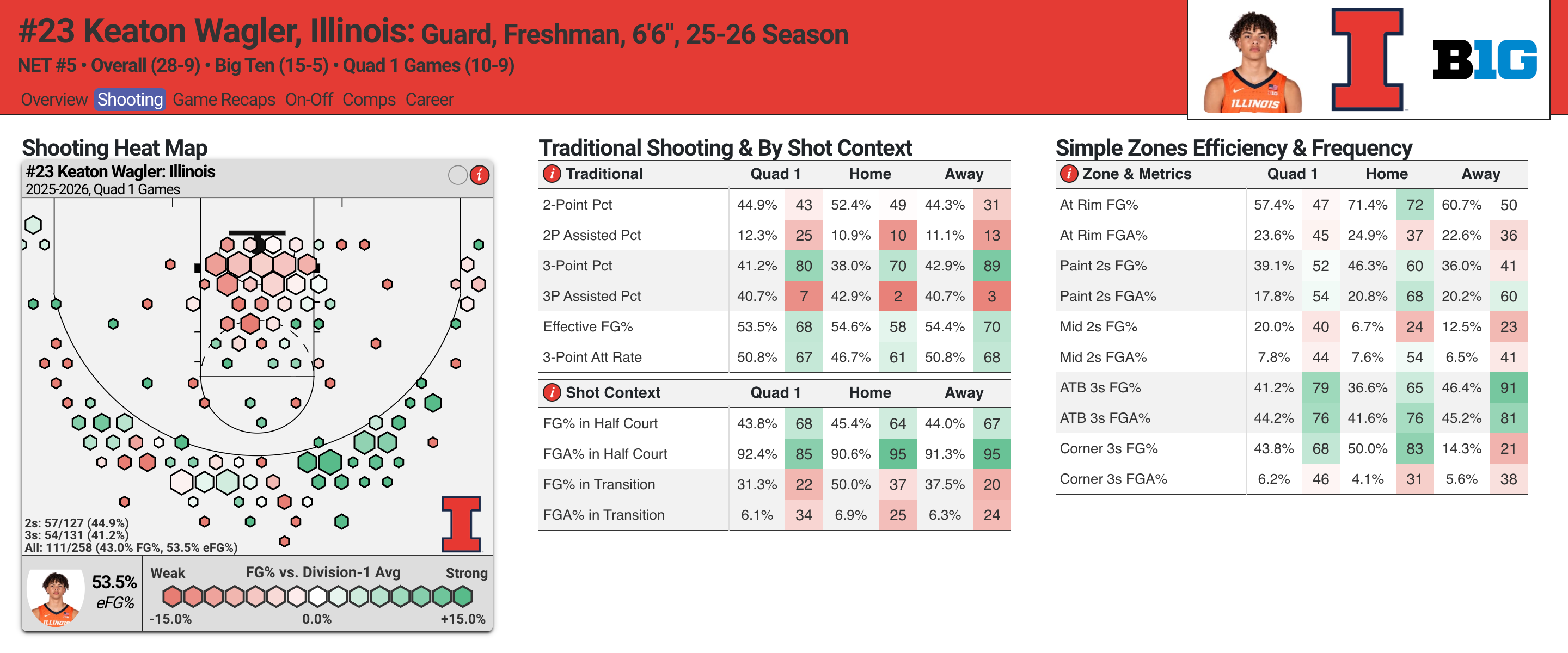
Because he is a slower, less athletic player, Wagler has to play more methodically, utilizing pace and counters, which he’s quite good at. But at just 188 pounds, I question how effective he will be at using bumps in the NBA.
To his credit, he plays extremely physically, often initiating and embracing contact. That 47.4 FTR is not fraudulent whatsoever.
Nevertheless, I can’t help but be terrified by his two-point scoring in the league and think there will be a ton of earnestness about his jump shot being elite. I’m more comfortable viewing him as a secondary initiator/ball handler — unless he adds a significant amount of functional strength.
Wagler is a very poor athlete by NBA standards, and his lack of strength is only part of it.
The same concerns extend to the defensive end. He has good size and feel, and he competes physically, but his lack of lateral quickness and strength can make navigating screens and point-of-attack defense difficult. His anticipation gives him a chance to become a solid team defender, but I’m skeptical that he’ll consistently contain NBA guards on the perimeter—a play where Elliot Cadeau scored through him lives on in my nightmares.
Ultimately, I understand the appeal, and I think he can be a good player. High-feel guards who can dribble, pass, and shoot almost always find ways to contribute, and Wagler’s offensive decision-making should translate immediately.
I have a difficult time buying into his upside as a primary initiator unless he makes significant physical gains, which can be tough to project.
6. Brooklyn Nets - Mikel Brown Jr.
Grade: B+
Mikel Brown’s intersection of shooting, driving, and creative playmaking gives him the outline of a star creator. He and Trae Young are the only two high-major freshmen in Bart’s database to post an assist percentage of 30 or more, shoot 10 or more three-point attempts per 100 possessions, and have a free-throw rate of 40 or higher.

This isn’t meant to be a direct comparison to Young. He’s not nearly the passer or decision-maker that Trae is, but I totally get why people are enamored with the combination of 3PAR, FTR, and AST%.
The concern is that a lot still has to go right.
His decision-making can be questionable; he turned the ball over at an alarming rate against better competition, and this was really the first year in which his rim scoring looked good enough to trust fully. Add in the back injury and questions about his on-ball defense, and I can see why people view him as a boom or bust prospect.
The injury essentially led to two different seasons for him. Through his first ten games (mostly vs weaker opponents), he was a dominant driver and playmaker, but couldn’t buy a bucket outside the paint.
When he returned, the competition was stronger; his driving came back down to earth somewhat, and he turned the ball over much more.
However, his three-point shot returned to form, and he was more productive and efficient overall.
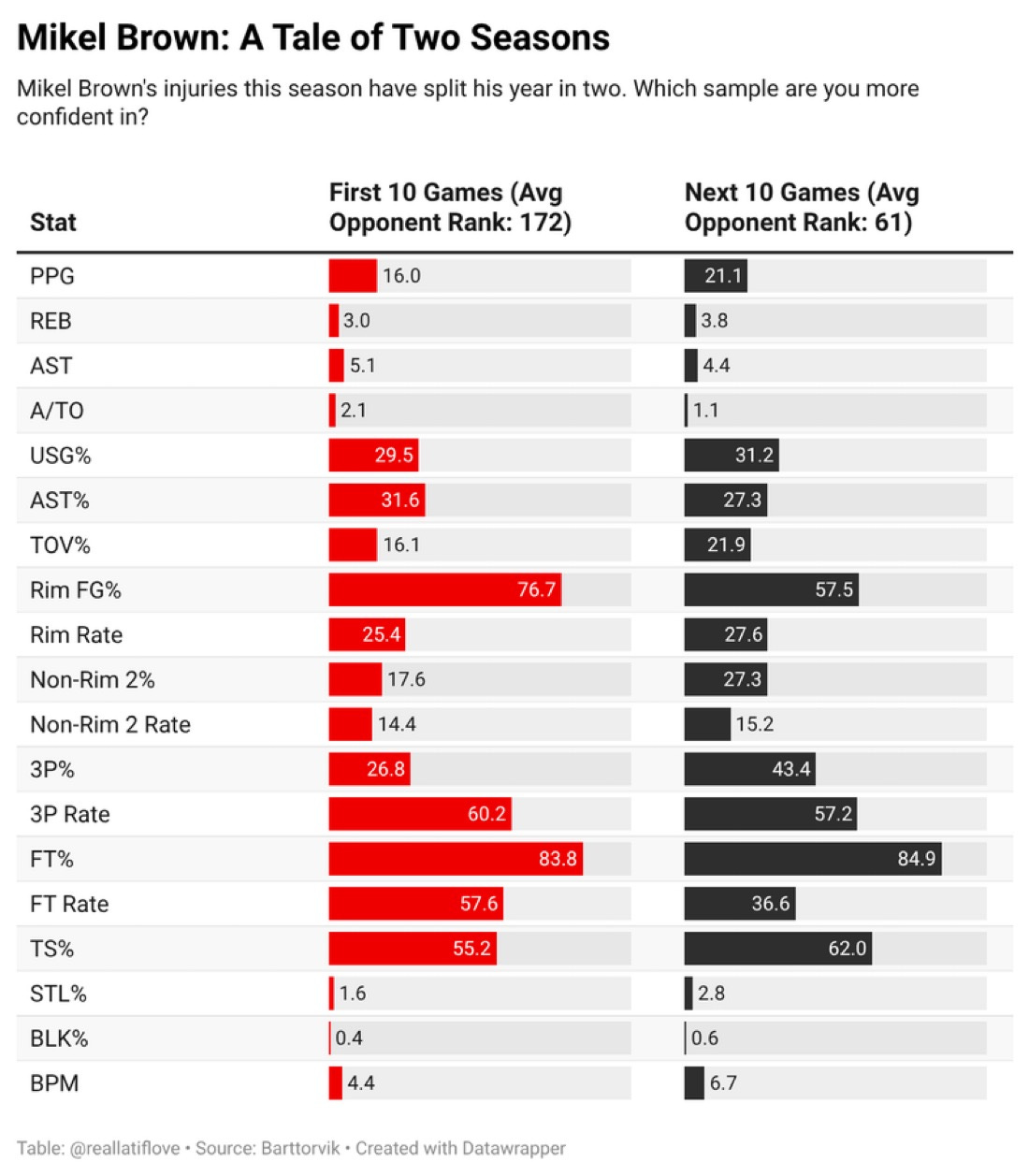
The question is: Can he harness the good of both samples and turn flashes of offensive brilliance into consistent dominance? If he can, he could have one of the highest offensive ceilings in the class.
I think Jordi Fernandez will give him the best opportunity to do so. I’ll let Gavin explain why.

7. Sacramento Kings - Darius Acuff
Grade: B-
Coach Calipari's guard, who had an electric freshman season and was drafted by the Kings in the top 10.
Have we seen this story before?
On a more serious note, Acuff looked unstoppable offensively at times this season. He handled extremely high usage, blended scoring and playmaking, and suppressed turnovers at a historic level. There aren’t many guards who can carry that type of burden, make advanced interior passes, play on and off the ball, and still avoid bleeding possessions away.
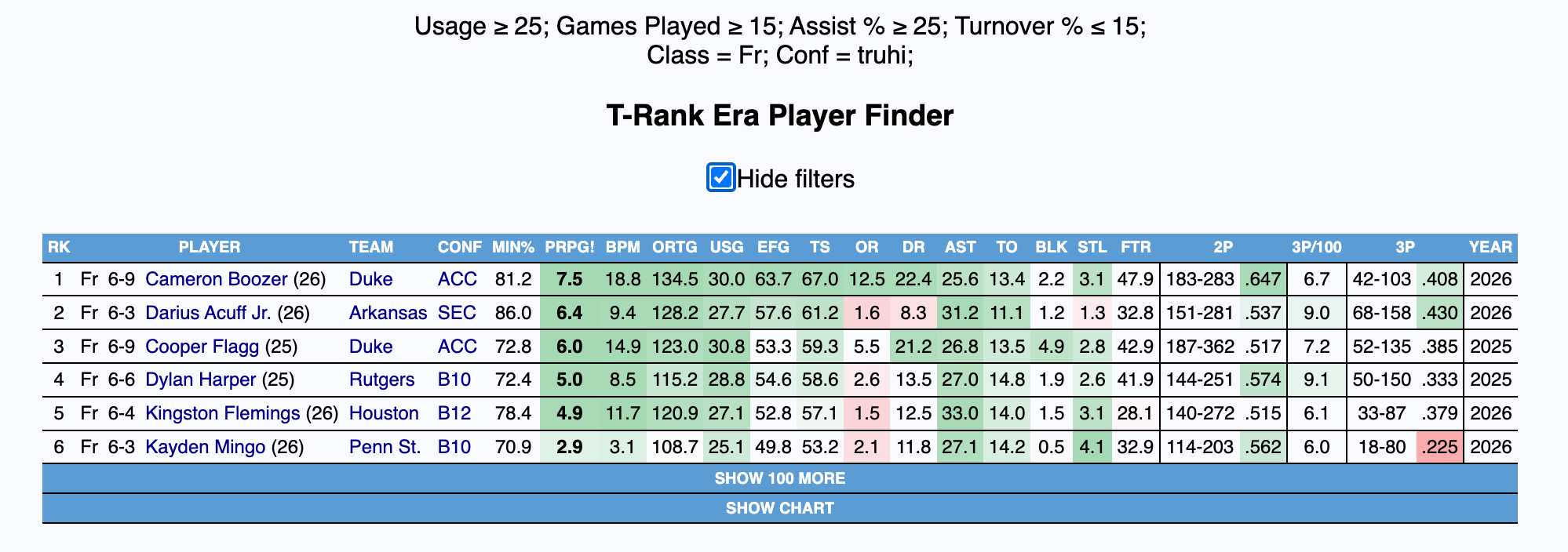
But I have some major concerns.
He struggled to score from two in the half-court (45.2 percent), mostly because he took a high frequency of mid-range shots (which he only shot 34.5 percent on) and non-rim twos when he couldn’t get all the way to the rim.
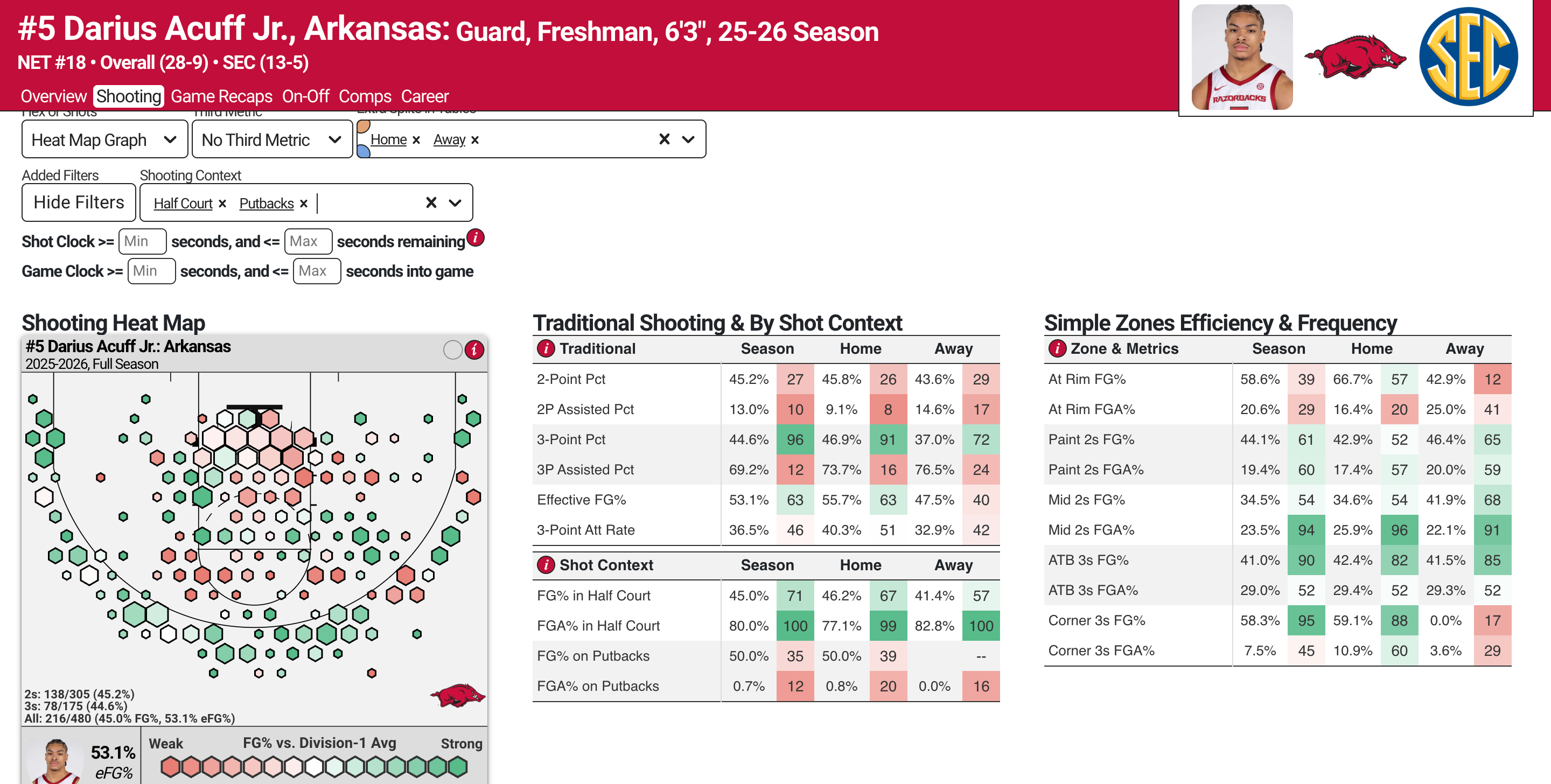
Acuff shot 44 percent from three, which did a lot of heavy lifting for his efficiency. The issue is that it was also an outlier, a great shooting season compared to the rest of his track record.
If that comes back to earth, how does he maintain efficiency?
The defense is also a real issue. The effort and awareness were poor both on and off the ball, and small guards have very little margin for error if they’re going to be targeted.
For this pick to hit, Acuff has to either keep shooting at an elite level, become a better foul drawer, or improve as a two-point scorer. If not, the offensive profile becomes a lot rougher than the box score suggests.
For a much more detailed look at his game, here’s a 3,000-word article I wrote about him a few months ago.
Diagnosing Darius Acuff: NBA Draft Twitter's Most Polarizing Prospect

It’s a well-known fact that head coach John Calipari is the best collegiate coach in the country (and maybe ever) at finding and developing guard talent for NBA success.
8. Atlanta Hawks - Kingston Flemings
Grade: B+
Flemings is one of the highest-feel prospects I’ve ever watched.
His processing on both ends is fantastic, and he pairs it with legitimate athleticism, possession-battle impact, and the ability to handle usage without turning the ball over. Considering he was basically Houston’s only viable ball-handler, the fact that he kept the offense afloat without hemorrhaging possessions is really impressive.
The two-way potential is tantalizing.
He can pressure the ball, rotate, make quick reads, push in transition, and play with a level of anticipation that most young guards don’t have. In fact, a freshman guard (in Barttorvik’s database) has never displayed his level of feel on both sides of the ball.
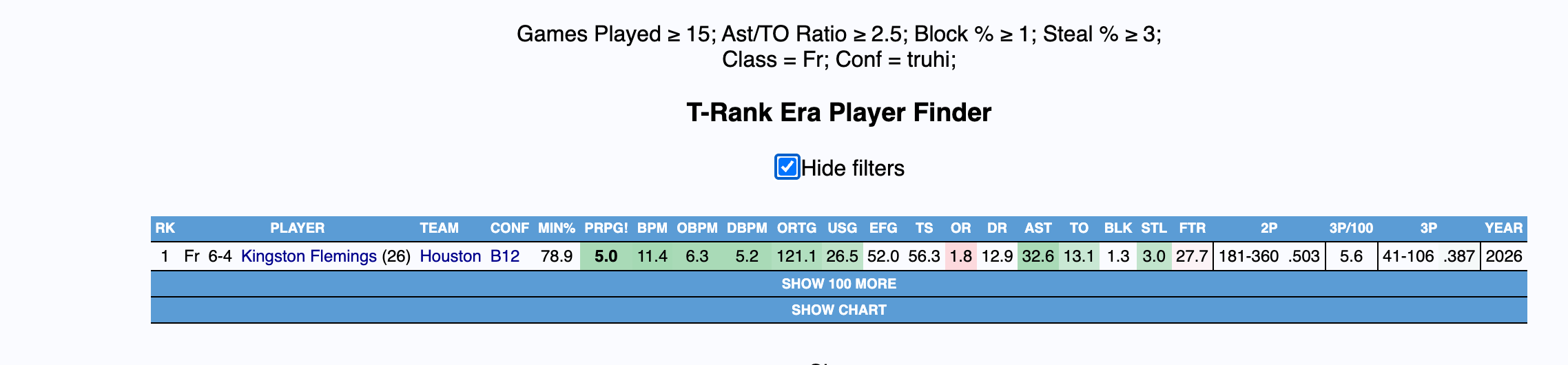
But the scoring process worries me.
Flemings is a low-volume three-point shooter and has never been a consistent foul-drawer. That is a tough combination if you’re trying to become an efficient NBA guard. He also struggled to finish at the rim in conference play, and the handle/gather package still needs work when he’s forced to create against length.
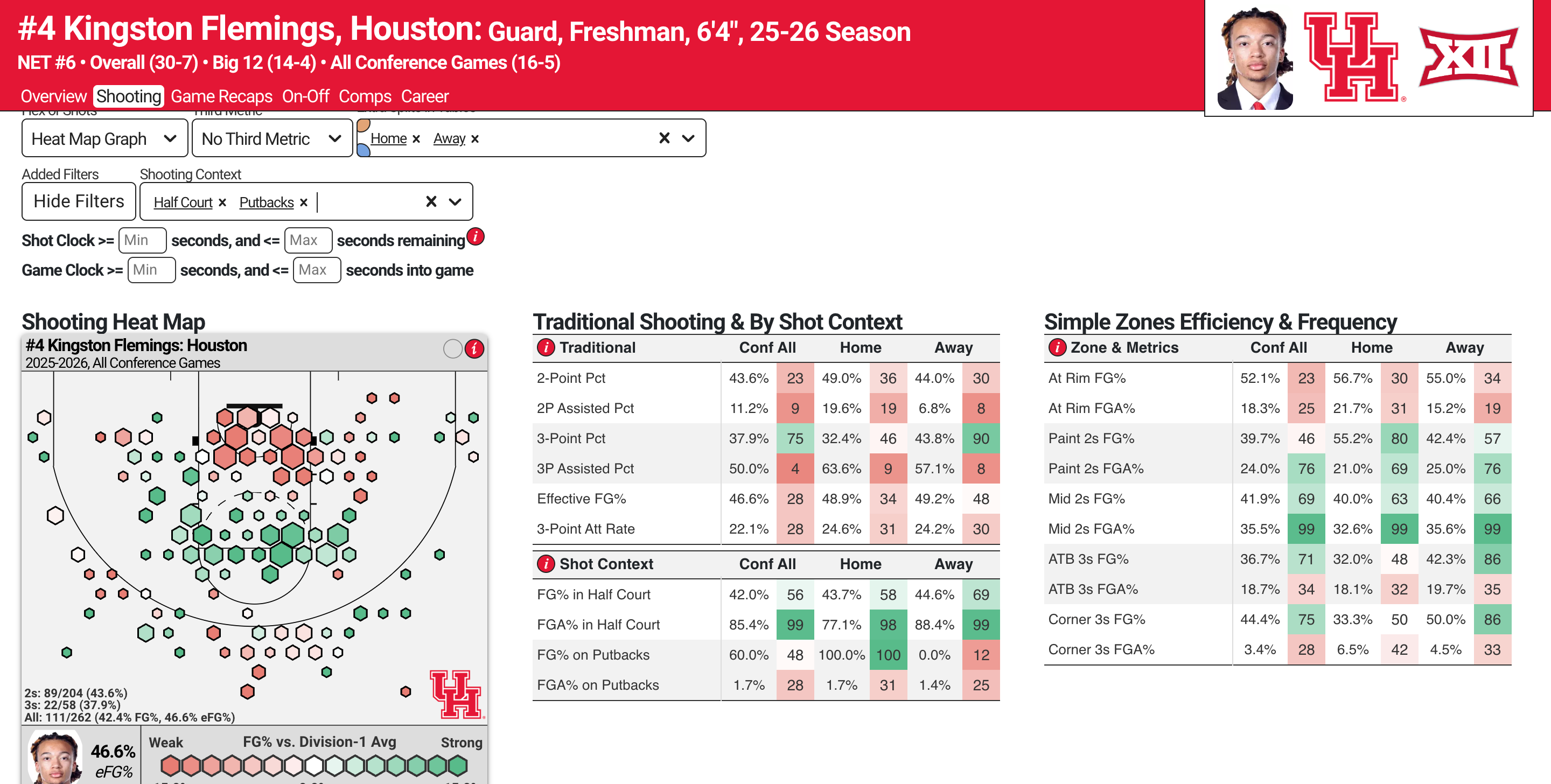
If he improves his three-point volume, starts getting to the line more, and improves his rim finishing (yes, I know the Houston context was not great), this pick could look really good. If not, he might be a high-feel, high-impact player whose efficiency is always capped by shot diet.
The Hawks needed more perimeter creation and playmaking, and he and Dyson Daniels are going to have opposing guards in hell.
For a more detailed look at his strengths, weaknesses, and areas for improvement, check out the article I wrote about him a few months back.
Kingston Flemings has Started his Reign as the Best Point Guard in the 2026 NBA Draft

In Kelvin Sampson’s 11-year tenure at Houston, he’s accomplished about as much as a coach can achieve short of winning a national championship.
Dallas Mavericks - Morez Johnson Jr.
Grade: B
This was the first real surprise pick of the night.
Morez Johnson’s size, length, athleticism, physicality, and motor are all excellent. He plays with real force, rebounds, runs, and gives you defensive versatility that very few bigs in this class can match.
He can switch, cover ground, protect the glass, and bring a level of physicality Dallas needs, especially with Dererk Lively and Daniel Gafford routinely dealing with Injuries.
He reminds me of a tamer Isaiah Stewart, who is one of the best backup centers and defenders in the league.
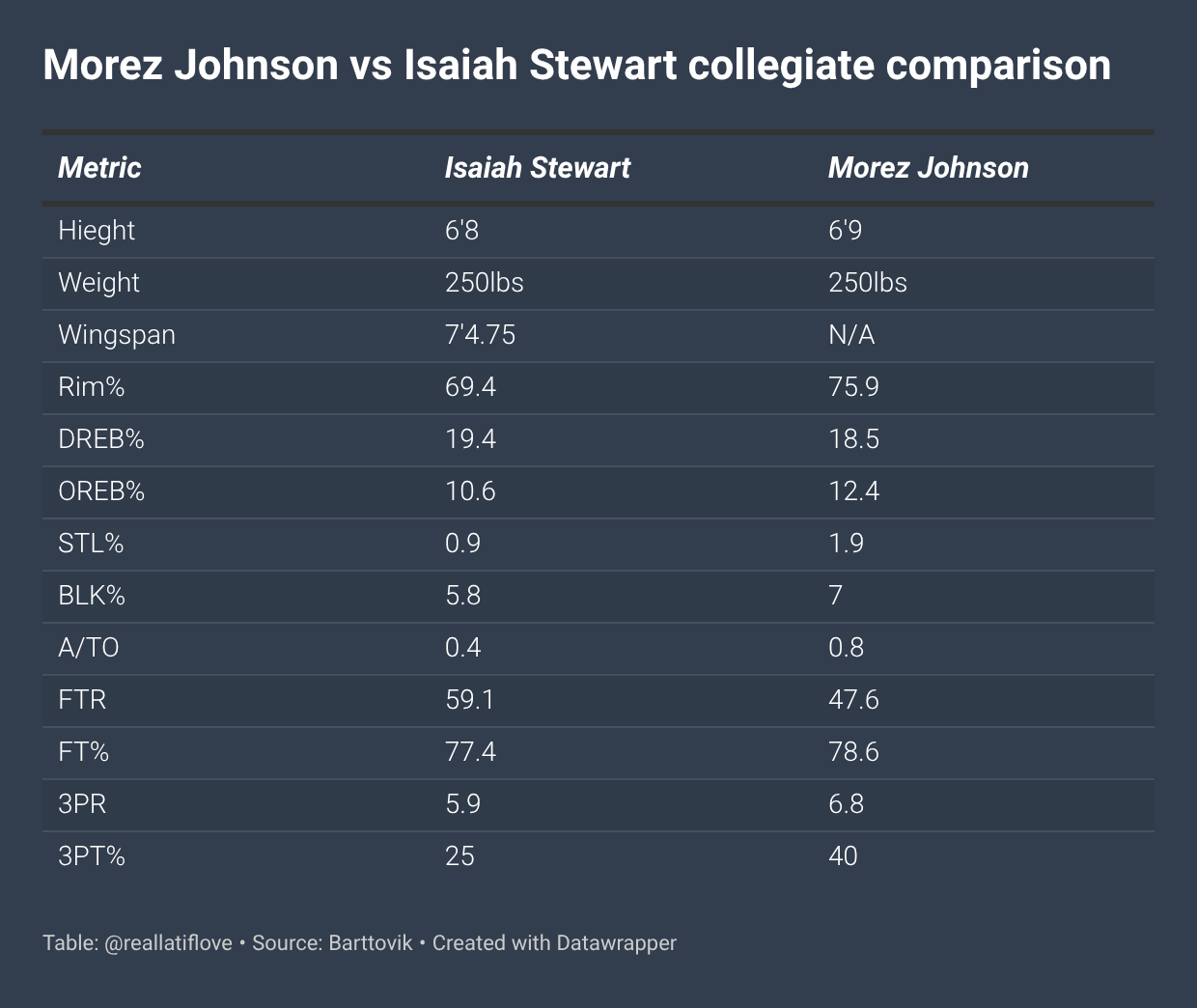
For him to be a good starter, I believe the improvement in touch he showed this year is key.
Johnson showed better indicators from the line and from three this season, and if that improvement is real, Dusty May have made the right selection, grabbing the guy that helped him win a title.
But that’s still a pretty meaningful “if.” The shooting sample is small, he has a career negative assist-to-turnover ratio, and he’s not someone I trust to create for himself or others consistently.
If the shooting is real, he’s the rare positive tweener who can provide lineup versatility as a floor-spacing / defending four who can moonlight as a small-ball five. I thought Dallas would lean offensively for its first pick, but they must believe he can make an impact early, and I understand why.
Milwaukee Bucks - Brayden Burries
Grade: B
Burries is a really well-rounded player.
He scored from all three levels, rebounded the ball extremely well for his position, pushed the pace in transition, and defended at the point of attack. He has enough strength, touch, and competitiveness to feel like a player who could help an NBA team.
Milwaukee just needed good players in the building, and Burries qualifies. His skill set reminds me of Bradin Podziemski, who, contrary to popular belief, is a good role player.
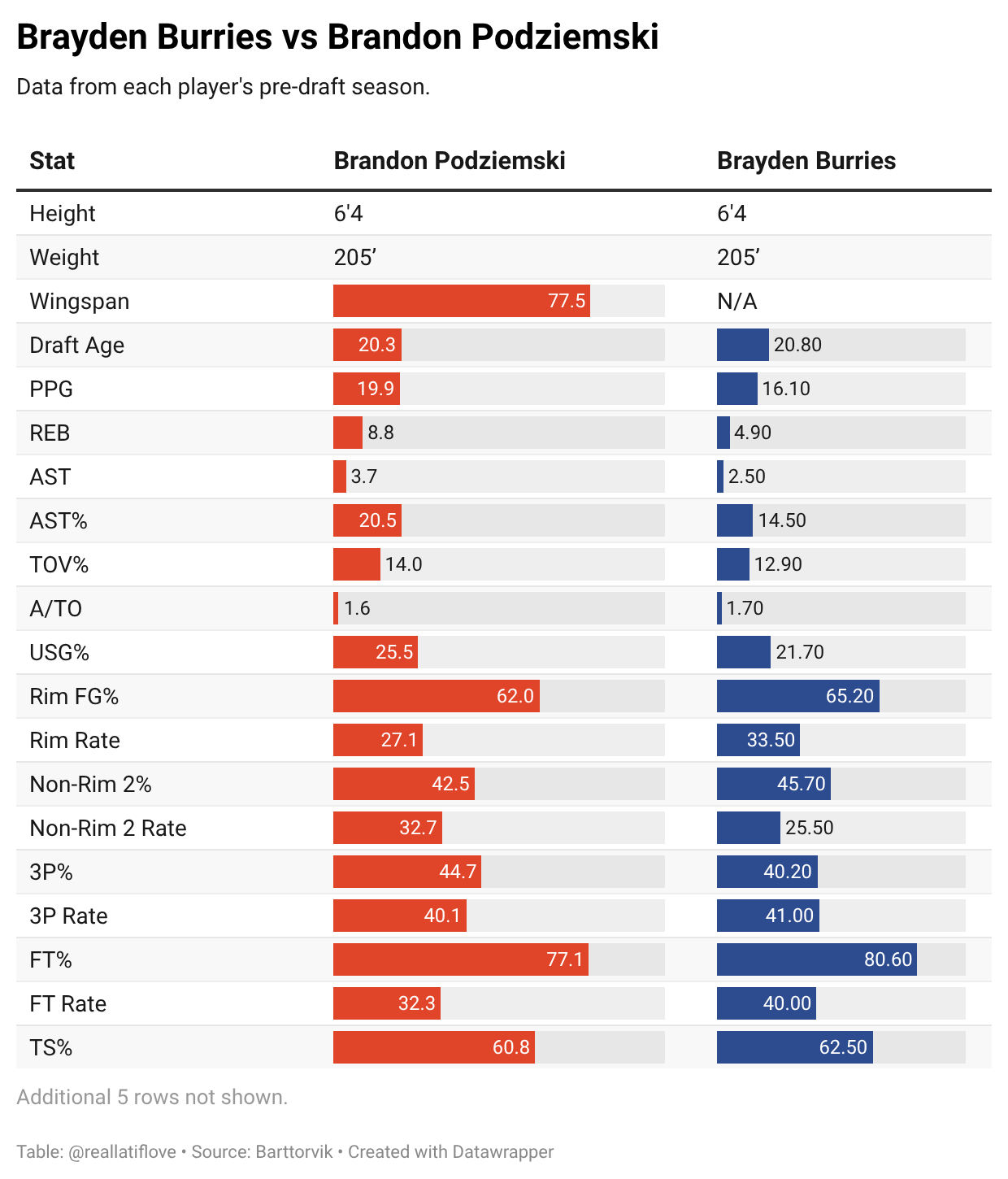
But I question if he has a standout skill.
That’s where the pick gets a little harder for me. He’s not a great athlete, the handle is limited, and I don’t think the passing/playmaking suggests he can scale up as a primary on-ball option. He was also one of the older freshmen in the country. If he’s more of an off-guard or undersized wing, then the shot and defense have to be really bankable.
I think he has the potential to be a really good role player, and maybe he can prove me wrong as one of the class's false ceiling players.
Golden State Warriors - Yaxel Lendeborg
Grade: A
I love it.
Lendeborg is going to fit so well in Golden State’s system. Yes, he’s going to be a 24-year-old rookie, but he also started playing basketball later than most, improved every single year of his college career, and is frankly a better prospect than many of the older players he gets compared to.
The appeal is the intersection of athleticism, motor, feel, defensive versatility, size, and scalability. He’s played and excelled at every role imaginable, and his ability to adapt to different team contexts is part of the reason why he’ll be a good player.
Golden State has always valued players who can process the game, make quick decisions, defend multiple positions, and keep the ball moving. Lendeborg checks so many of those boxes. He can rebound, pass, defend, push pace, attack closeouts, and play within a motion-heavy offense without needing plays called for him.
The concern is the shooting and creation.
He really only has one year of good three-point shooting at volume, and the lack of handle/pull-up shooting limits the creation upside. At his age, the margin for error is a lot lower. The success stories are few and far between, but I’m willing to bet on him as an anomaly.
And for this team, in this system, I’m willing to buy the fit.
I hope we get to see Steph / Jimmy / Yax / Dray / KP lineups. The passing, physicality, defensive versatility, and collective processing in those groups could be amazing.
12. Oklahoma City Thunder - Aday Mara
Grade: A
Potentially the Isaiah Hartenstein replacement?
Mara is one of the best rim protectors in the class. His size, length, timing, and deterrence in drop coverage are all special. Opponents took nearly 3 fewer shots at the rim per 40 minutes with him on the floor than when he was off, and a near-7 % drop-off at the rim.
He also has one of the more unique size/feel intersections in draft history. He holds the highest assists percentage for any player 7’2 or higher.
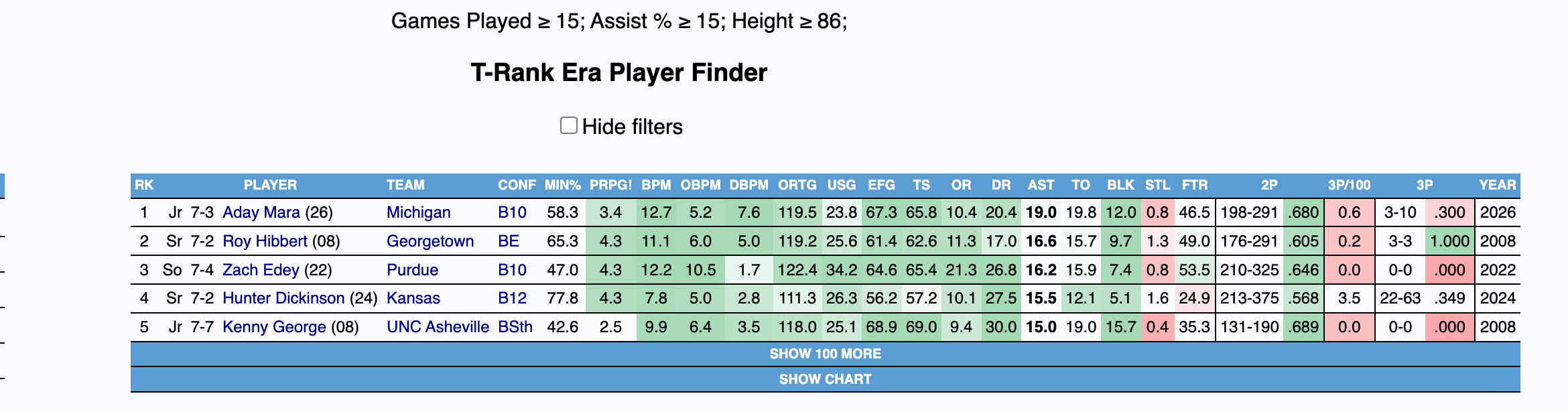
I have questions about his core strength, conditioning, mobility, turnovers, and shooting touch, all of which could put a real cap on the starter outlook. He can struggle with physicality, and NBA teams will absolutely test whether he can move in space and survive repeated ball-screen actions.
However, the Thunder don’t need Mara to play 30 minutes a night or become a star. They can use him for 15-20 minutes, simplify his role, let him include shots at the rim on both ends of the floor, and weaponize his passing.
If Mara can get stronger, clean up the turnovers relative to his usage, and hold up just enough defensively outside of deep drop (he should be able to with the level of POA the Thunder have), Oklahoma City just added another very useful frontcourt piece.
13. Milwaukee Bucks - Nate Ament
Grade: C
This is the most Bucks pick ever.
Ament is 6’10 and finished the season shooting 45.9 percent at the rim and 39 percent from two in the half-court. He had just 13 dunks in 35 games. For a player of his size and theoretical wing skill, those numbers are pretty alarming.
Below are the players who are Ament’s size, have been drafted since 2008, and have shot 45 percent or less from two. It’s not a list you want to find your list on, but the players who were able to flesh out meaningful careers did so as 3&D / utility players.
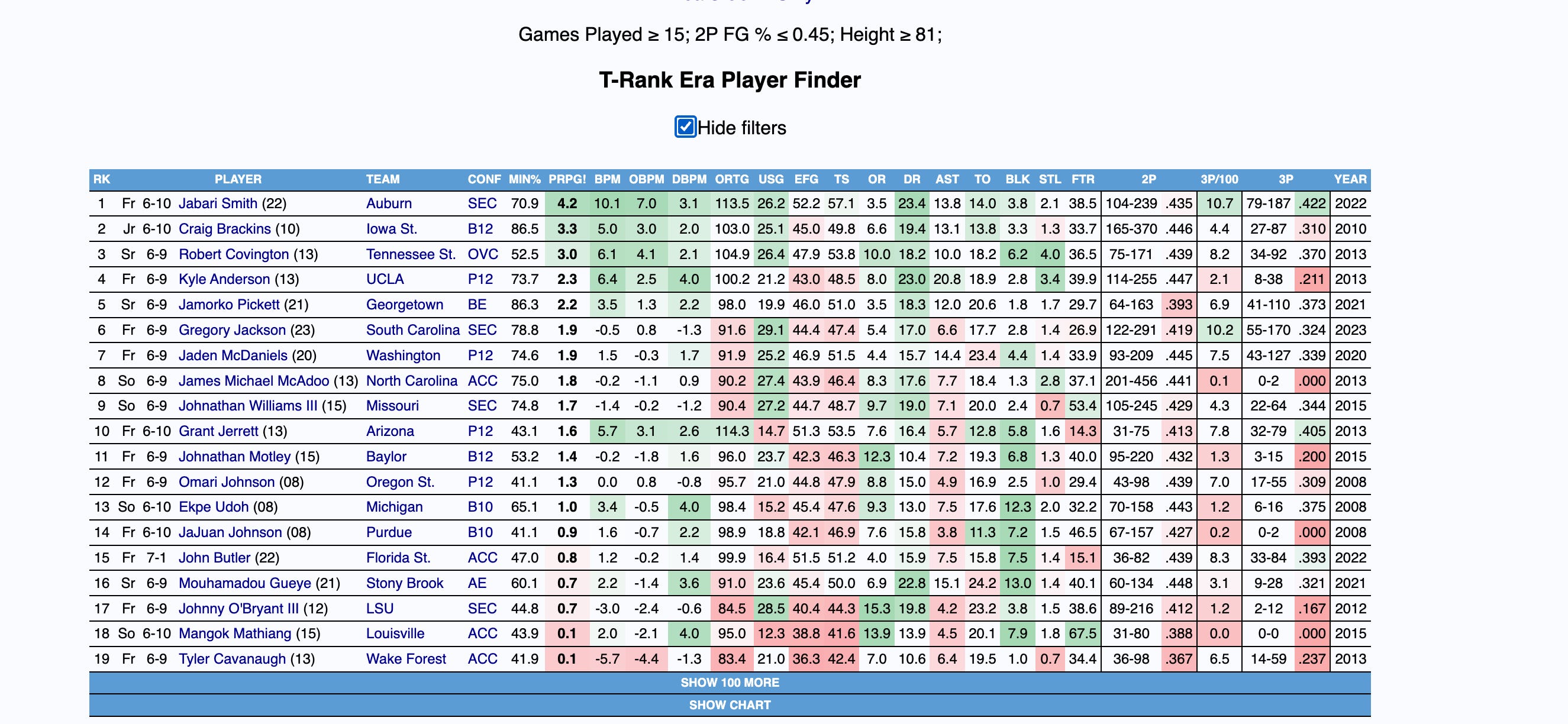
The idea is easy to understand.
Before this season, the priors suggested he could become a tall shooter who rebounds, defends multiple positions, and adds connective passing. He shot 38.5% from three in his pre-NCAA sample with a 39.4 three-point attempt rate, averaged 2.2 assists as a senior, and 1.6 steals and 2.4 blocks per 40 possessions.
Because of what he showed in high school, I am still holding out some hope that a scaled-down NBA role could make him perform better. I think Tennessee was a terrible system for him and enabled some very bad habits.
But if he gets miscast as a creator wing, this is going to be a bad pick.
He’s skinny even after adding weight, not a good athlete, struggled badly from two, and was an underwhelming defender. At some point, there’s a danger in chasing the idea of a player instead of what the reality has been.
The pathway to success remains, and I understand the thought process behind Milwaukee's long-term development bet. Still, the vision would look more like Jabari Smith Jr. to me than Kevin Durant or Brandon Ingram.
14. Charlotte Hornets - Hannes Steinbach
Grade: B+
The Hornets really struggled to score from two last season, and they just picked up one of the best two-point scorers in the class.
Steinbach is strong, efficient, mobile, excellent on the glass, and has been productive in multiple contexts. He can finish, rebound on both ends, run in transition, and make enough passes to keep the offense connected.
The Hornets are leaning into offense, and Steinbach is the best offensive big in the class.
I like the pick, but I’m curious how they make it work defensively.
The lack of high-end horizontal and vertical athleticism could limit him in space and as a rim protector. If he’s not a plus defensive five, then the shooting becomes even more important for playing him at the four.
If he shoots it like I think he can, it would open up more two-big looks, make it easier to pair him with different frontcourt partners, and raise the ceiling of the pick. The scoring, rebounding, touch, and feel are enough for me to buy it. He and Moussa Diabate are going to be a ton to deal with on the glass.
I broke down Steinbach’s game more in an article a few months back.
Hannes Steinbach Lived up to the Hype

University of Washington forward Hannes Steinbach came into the season as one of NBA Draft Twitter’s favorite players to rank above consensus and place inside the top ten — and it made sense.
Chicago Bulls - Dailyn Swain
Grade: B
Bryson Graham wasn’t playing about SLAP.
Swain fits the size, length, athleticism, and physicality philosophy to a T. He was one of the best slashers in the country this season, as he converted 64.3 percent of his looks at the rim, with only 17 percent of his buckets being assisted. The combination of handle, downhill pressure, passing flashes, and defensive tools is really intriguing.
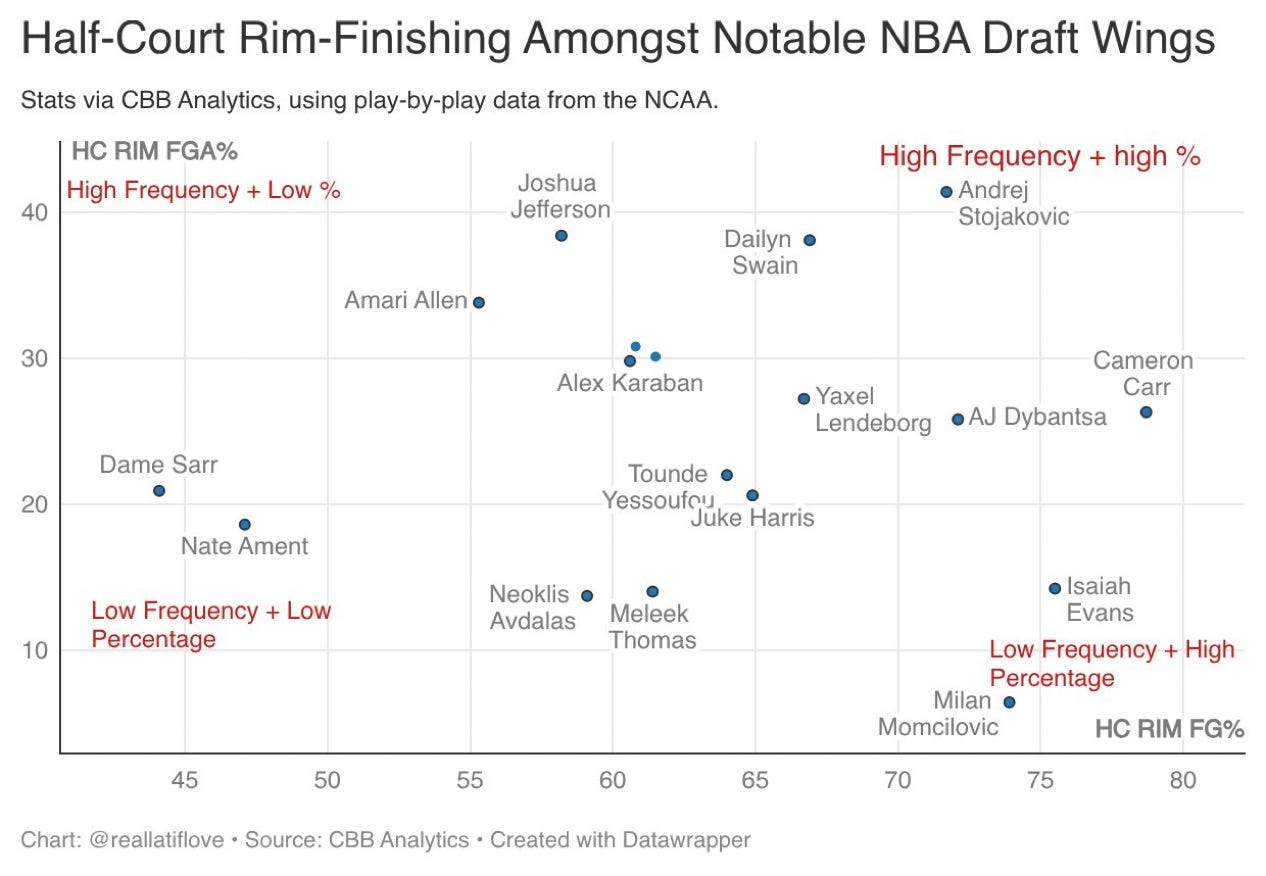
The Bulls are building a roster full of long athletes who can cover ground, run, and score in transition.
The lobs from Josh Giddey to him, Wilson, and Nic Claxton should be fun, and I expect the Bulls to keep shades of their fast-paced, high-ball movement offense, despite losing Billy Donovan.
My concern for Swain centers on his role. Can he earn enough on ball reps to maximize the slashing propensity he put on display this year?
Is he good enough off the ball offensively to provide value without the ball in his hands?
His catch-and-shoot numbers were poor, and the turnovers climbed as his on-ball usage increased. That’s the tension in the profile. He was a dominant self-creator, but the more he had to create, the more prominent the other parts of his profile that had intrigued scouts in prior years became.
For this pick to really hit, he has to marry the scoring and playmaking while getting back to being a consistent defensive playmaker. If the shot becomes respectable, the Bulls might have a really useful two-way slasher. If not, the spacing gets tricky.
Oklahoma City Thunder - Bennett Stirtz
Grade: A+
The Thunder are the best team in the league when healthy, and their only real flaws are shooting and secondary ball-handling outside of Shai.
So, naturally, they just grabbed one of the best shooters and ball-handlers in the class.
Stirtz has had highly efficient three-level scoring seasons in back-to-back years. He processes extremely quickly on drives and in pick-and-roll, rarely looks rushed, and has the type of stamina that lets him keep pressure on defenses all game. His profile eerily reminds me of Ty Jerome, though he had a much better creation burden.
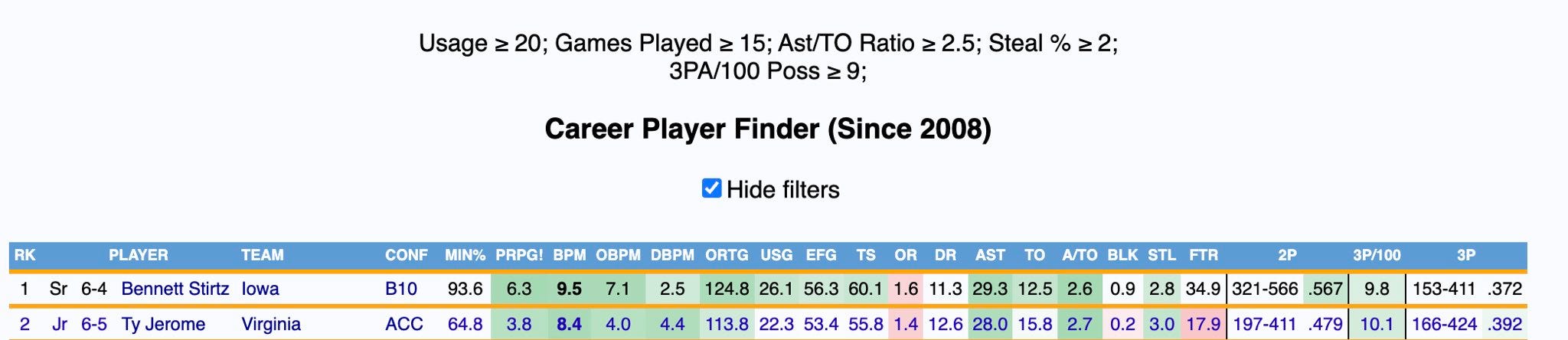
He doesn’t have great horizontal or vertical athleticism, and I do worry about him as an on-ball defender. Stronger, more athletic defenders also bothered him when he tried to create clean separation or generate rim attempts against the better teams in the country. In these games, he often resorted to heaving hoist tough threes, and his effiency dwindled.
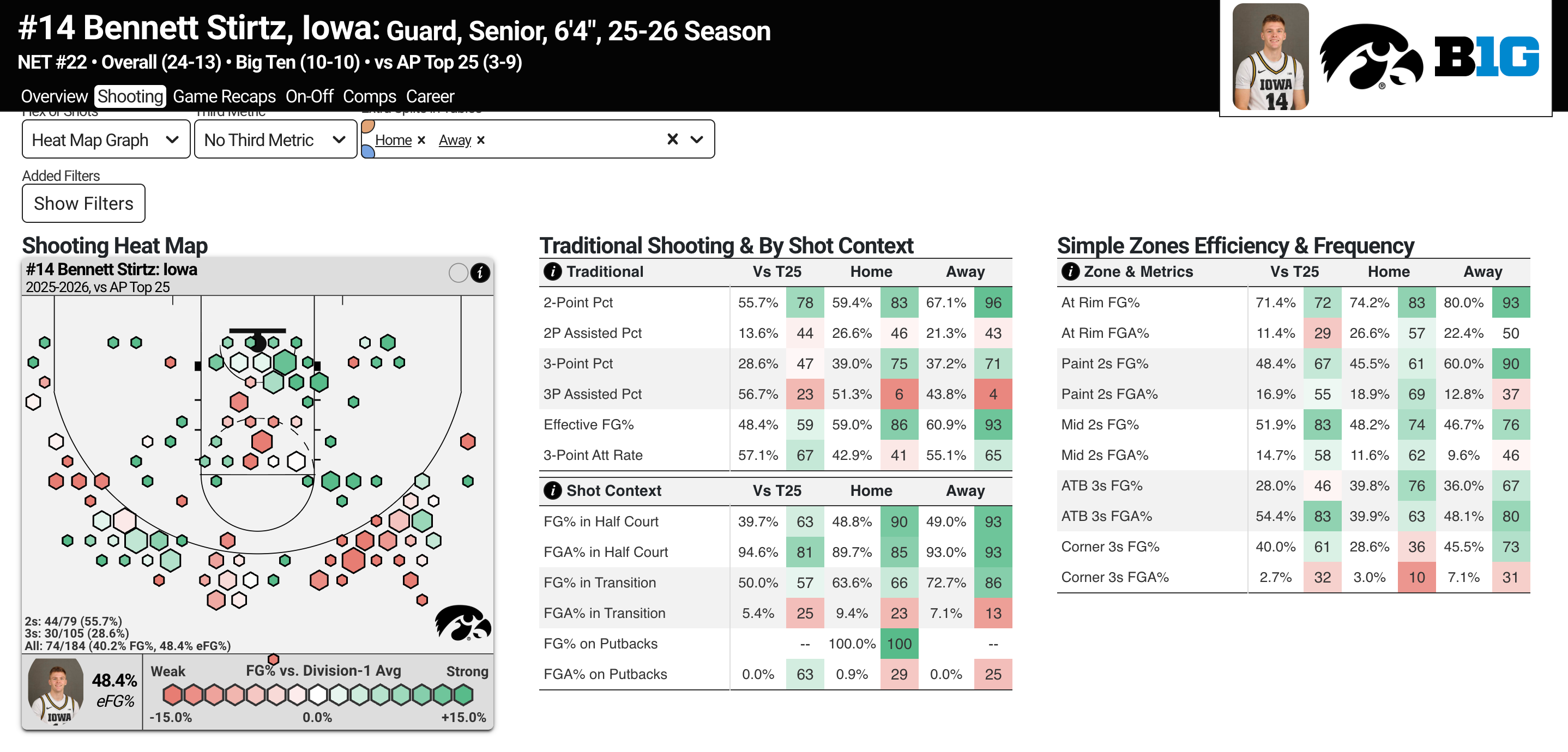
But that was just a 12-game sample size, where his teams were routinely outmatched, and he’s going to be on a team with some of the most talented teammates in the league. His shooting and processing are so good that I’m not overly concerned in this context.
OKC won’t need him to be a primary creator. They need him to shoot, handle, make quick decisions, and punish teams when they load up on Shai.
We’re going to come back to this and think: how did they get away with this?

17. Detroit Pistons - Ebuka Okorie
Grade: A
The Pistons badly needed ball-handling and secondary creation, and they got one of the best ball-handlers and creators in the class.
Okorie’s handle is elite, and his horizontal athleticism gives him real advantage-creation equity. He handled extremely high usage on a very poor team, suppressed turnovers at a historic rate, and still maintained good relative efficiency.
That’s not easy.
I think he’ll be able to play with Cade one day because he can create advantages without needing to dominate every possession. He can push in transition, break down the first defender, and give Detroit another player who can actually manipulate the floor.
The concern is the scoring process.
He really struggled to finish at the rim in half-court sets, and he needs to learn to decelerate into non-rim and mid-range looks. He also has to shoot more threes because, at his size, living on difficult two-point attempts is going to be a tough way to maintain efficiency.
The passing volume was also more lukewarm than I’d like, and the defensive effort was inconsistent.
Still, this is an excellent pick. Detroit needed creation, and Okorie gives them one of the best creation bets available.
I won't dive too deep into his profile, because I just wrote an article on him last month. Feel free to give it a read!
Ebuka Okorie has earned his spot at the NBA Draft Point Guard Roundtable

In medieval times, the Knights of the Round Table were considered the most noble men in the land.
Charlotte Hornets - Christian Anderson
Grade: B-
I love Anderson as a backup guard.
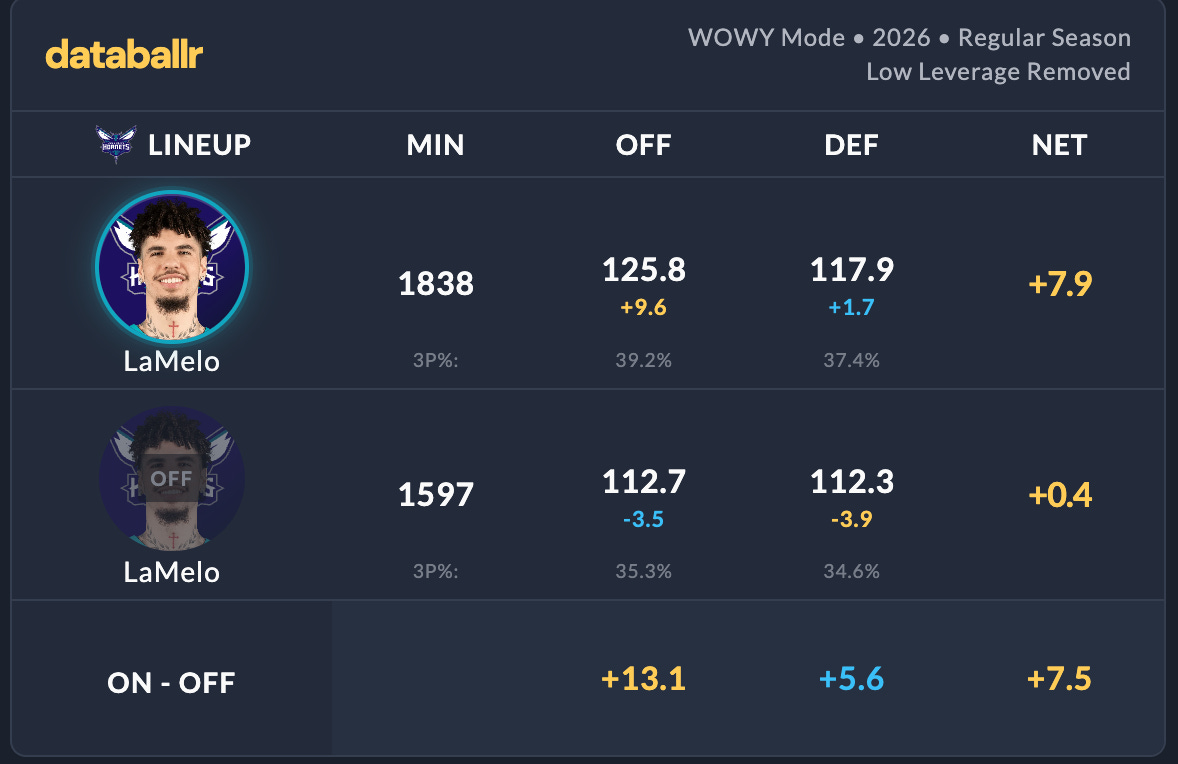
He can emulate what LaMelo Ball does for Charlotte to a much lesser extent, and that matters because their offense was terrible without LaMelo on the floor last season.
He can dribble, pass, shoot, and play with enough creativity to run second units. He has a deep range, good feel, and enough scalability to play alongside better players, which is important for a smaller guard. Anderson will fit right in with Charlotte’s high-3PAR offense.
I was also really impressed by how he ran lineups without All-American JT Toppin this season.

But the concerns are obvious.
He’s not a good athlete, struggles to get to the rim, can be screen-reliant, and has had issues protecting the ball this season (even given the usage). He competes defensively, but the size and athletic limitations are going to make him a target in higher-leverage situations.
If Anderson shoots it at a high level and gives Charlotte competent backup point guard minutes, this will be a fine pick, but they didn’t address some of their defensive issues, and I wonder what this means for Coby White?
19. Toronto Raptors - Allen Graves
Grade: B-
This was definitely a shocking pick.
I thought Toronto was for sure going to select Labaron Philon. Instead, they take Allen Graves, who fits the trend of high feel, high motor, strong cognitive indicators at both ends, good hand-eye coordination, and real possession-battle impact that the Raptors used when selecting Collin Murray-Boyles last season.
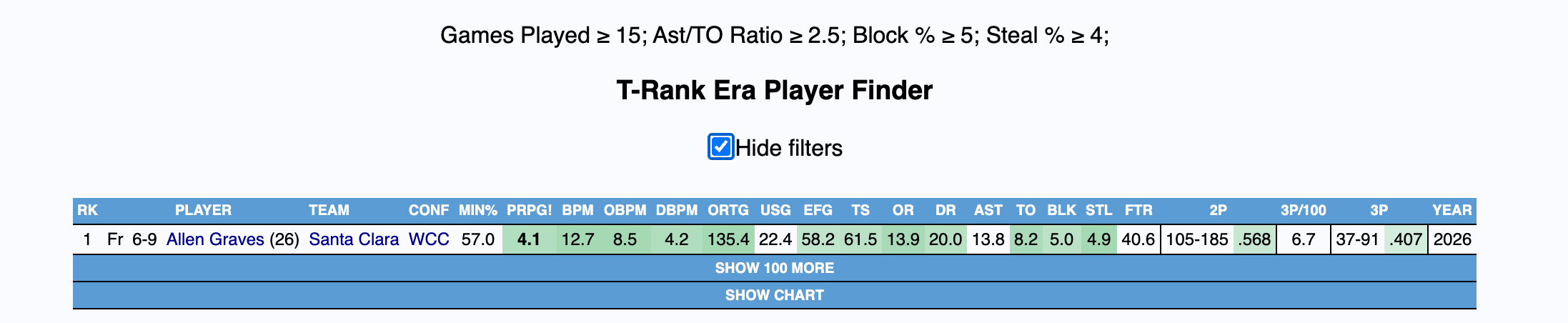
He is the only player ever to post the numbers below. That’s not something to look past.
I understand the appeal in a vacuum.
Graves is a great passer for his position, should shoot it in the NBA, and has enough defensive awareness to make rotations, create events, and help you win on the margins. He projects as a valuable role player. Toronto is clearly stacking high-feel, high-impact players.
I just think they had other needs to address, mainly more shooting and perimeter creation, and a true five to replace Jakob Poetl.
I believe Graves is more of a four in the NBA, and his time at Santa Clara showed that. He’s not a great athlete horizontally or vertically; his conditioning is questionable, and he fouled a ton.
20. San Antonio Spurs - Jayden Quaintance
Grade: A
The only reason this isn’t an A+ is the concern around Quaintance’s health.
The team with a future GOAT defender candidate just grabbed the best defender in the class. Quaintance’s combination of motor, athleticism, twitchiness, strength, and length is one of a kind.
He probably won’t ever win Defensive Player of the Year because the offensive shortcomings may limit his minutes and production, and he’s playing with Wemby. Still, he can offer DPOY-level defense in shorter bursts.
That is a ridiculous outcome at pick 20.
He is one of the youngest players in the class, plays with a tenacious motor, and has world-bending defensive tools. Put him next to Victor, and the defensive ceiling gets pretty absurd pretty quickly.
The offense is the obvious concern.
The touch is poor, and he’s a questionable decision-maker. I don’t know how much offensive upside there is beyond screening, finishing, offensive rebounding, and short-roll flashes. The risk of a new injury, given his size and play style, also matters.
But I love this for the Spurs. For more on Quaintance, see my article on his historic freshman season at Arizona State.
Jayden Quaintance reminds me of a famous Looney Tunes character

The original Looney Tunes shorts aired from the 1930s until the late 1960s and featured characters like Bugs Bunny, Daffy Duck and Tweety.
21. Memphis Grizzlies - Karim Lopez
Grade: C+
I rarely doubt the Grizzlies’ scouting department, but I think there were better players on the board.
On the bright side, Lopez is a good driver off the catch, has creative footwork, a loose-but-interesting handle, and produced at a young age in a pro league in back-to-back seasons. That matters.
There is a real developmental foundation here.
He has size, can rebound, and has enough flashes as a driver and connective offensive player to understand the bet. Memphis has also earned some benefit of the doubt with its player evaluation.
But I’m worried about the processing.
Lopez can be slow to read the floor on drives, and his off-ball defensive feel is not where it needs to be. He also doesn’t have one true standout skill at the moment. Is he a great shooter? A great defender? A great passer? A great athlete?
I’m not sure.
That makes the pick harder to love. If he cleans up the decision-making and the shot comes along, there’s a useful wing outcome. But right now, it feels like a bet on youth, tools, and production context more than a clearly defined NBA skill.

22. Philadelphia 76ers - Labaron Philon Jr.
Grade: C+
I like the player. I like the value. I think the 76ers need a backup guard.
But it feels like they had stronger needs to address.
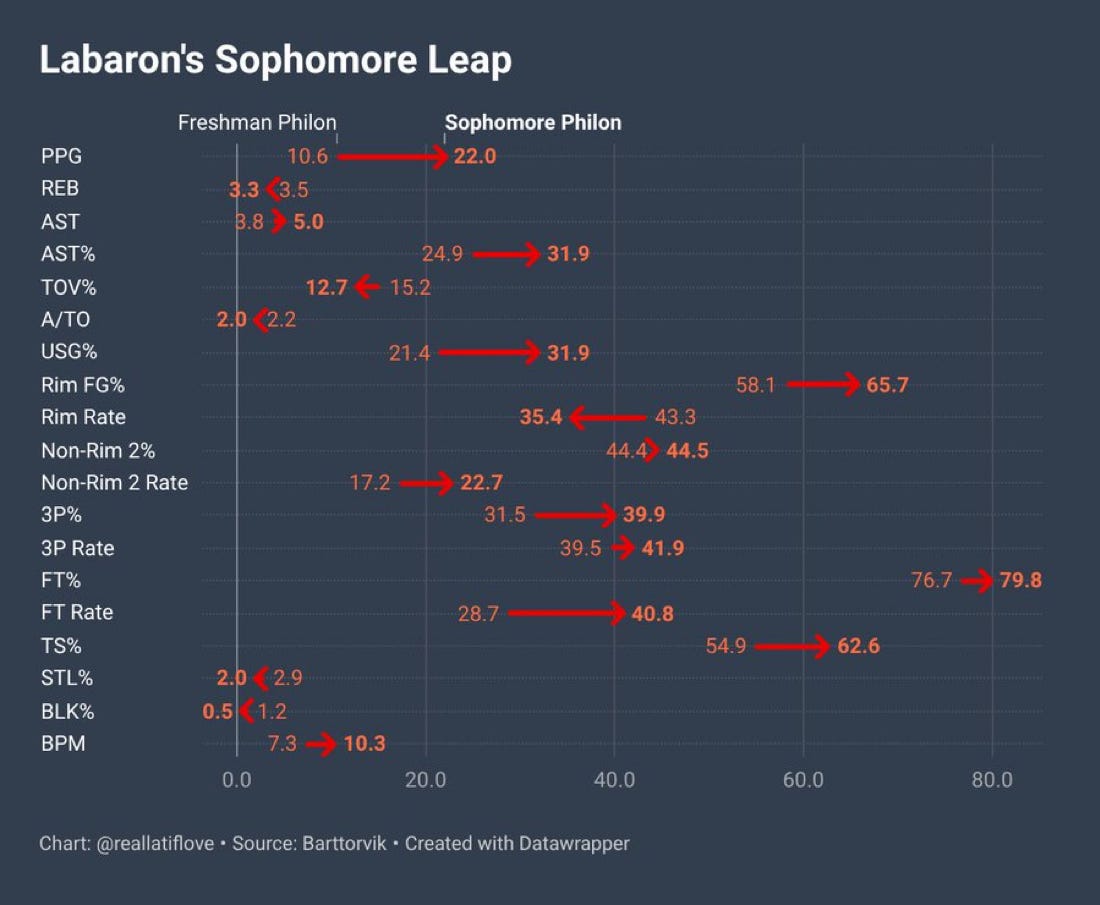
Philon improved his three-point volume and efficiency, became stronger and more poised as a driver, and was a legitimate three-level scorer this season. He self-created a ton of his looks and handled heavy usage without turning the ball over. He legitimately answered every question I had for him and led Alabama to a top-five offense in the country.
As a player, I get it.
He can handle, score, pressure defenses, and give Philadelphia another guard who can create offense when their stars sit. He also made real strides from last year, which makes the projection more interesting.
But the team fit is where I pause.
The Sixers badly needed a power forward or an athletic wing. Maybe their thought process is that they’ll address that outside the draft, but passing on frontcourt size here is still a little confusing.
There are also player concerns.
Philon relies on craft because of limited athleticism; he’s only 176 pounds, the release needs to speed up, and the defense has fallen off with more usage. For him to become a playoff guard, he has to marry the positives of his first- and second-year student seasons.
23. Atlanta Hawks - Zuby Ejiofor
Grade: C+
Zuby is a devastating defender with an extremely high motor.
He brings elite strength, lateral quickness, and mobility, which gives him a chance to guard up and down the lineup. He also grew as a passer, driver, and finisher throughout his career, and he brings real value on the offensive glass.
This is around where I had him on my board, so I can’t dislike it too much.
Atlanta needed more physicality and more defensive versatility in the frontcourt, and Zuby gives them both. He competes, rebounds, defends, and gets his teammates more involved than he used to.
But the positional fit is weird.
He feels like a five offensively and a four defensively in the NBA. He doesn’t have true center size, rebounding, or rim protection to comfortably play the five full-time, but he also doesn’t have the perimeter shooting track record or handling to play the four clearly.
I like the player, but I’m not fully sold on the vision.
24. Los Angeles Lakers - Cameron Carr
Grade: B
The Lakers add a great play-finisher next to Luka.
Carr brings much-needed athleticism, shooting, and off-ball scoring. The shot is the obvious sell. He has a deep range, can hit difficult looks, and has the kind of movement/off-ball scoring profile that should fit next to a superstar creator.
They need players who can finish possessions, space the floor, run, and punish defenses for loading up on Luka. Carr has value in that type of role. He was
He also brings some weakside rim protection, which is probably the most interesting defensive part of the profile.
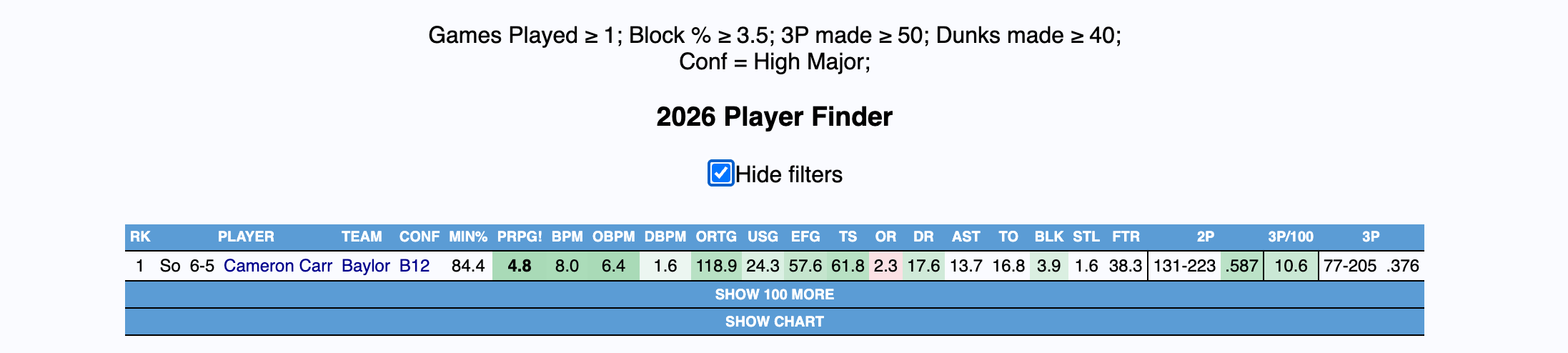
He was the only high major player in the country to finish with fifty threes, forty dunks, and a block percentage of 3.5 percent or higher. Another player who did that was Keegan Murray.
But I do have worries.
Carr had one season of production, was heavily assisted, didn’t pass well, is very skinny, and will turn 22 as a rookie. He also struggled to score from two against quality competition and has high hips when guarding the ball.
Still, the Lakers needed better athletes and more shooting. Carr gives them that. For any Lakers fans, here’s my full article on Carr from earlier this season.
Cameron Carr is Catapulting up NBA Draft Boards

Every NBA Draft Cycle, there’s a mystery box player who nobody had on their preseason boards but explodes onto the scene in November.
25. Dallas Mavericks - Sergio de Larrea
Grade: C
I thought this was a draft and stash, but maybe not?
The size and passing are pretty fun, and Sergio has shot well from three over the last two seasons. That combination alone makes him interesting. Big guards who can pass over the top, make quick reads, and hit open threes are always worth monitoring.
They don’t necessarily need immediate minutes from this pick, and de Larrea gives them a long-term skill bet, but the defense and turnover numbers have spooked me for years with him.
26. San Antonio Spurs - Tarris Reed
Grade: C
The Spurs really didn’t like Luke Kornet’s minutes in the playoffs this season, huh?
Reed was excellent this year. He’s one of the strongest players in the class and blends that strength with coordination, touch, and good footwork. He became a really good interior scorer, dominated the glass, and had the best passing season of his career.
The development as a hub passer is the most interesting part.
If Reed can make quick decisions, punish mismatches, and keep the ball moving, he has a clearer NBA pathway than he did earlier in his career.
But I worry about the defense a ton.
He’s not an explosive leaper, which could limit his rim-protection impact, and he had real issues guarding pick-and-roll at times this season. He’s also an older prospect with one season of draftable production and a below-the-rim finisher. I am a bit weary, but I do not hate the 26th pick.
27. Boston Celtics - Chris Cenac
Grade: A
I was very low on Cenac throughout this cycle because I think he was more tools and talent than real production.
For months, I saw a tweener with a terrible shot diet, consisting of double the mid-range jumpers compared to any other shot. I saw a player who, despite being 6’11 with a 7’5 wingspan, finished with a 2.6 block percentage and a 19.7 free-throw rate. I saw a player who is said to have shooting upside shoot 33 percent from three and just 62 percent from the free-throw line.
I still see that player.
However, he’ll be donning green and white, and I think it is the perfect situation for him. It will take time, but the Celtics will clean up his shot diet and maximize his length and athleticism on the defensive glass. I believe Cenac can be a versatile defender if he can increase his physicality and awareness.
It’s a swing, but who am I to doubt the team that got quality play out of Neimas Queta, Luke Garza, and Luke Kornet?
The vision now is Dunks + threes.
28. Brooklyn Nets - Joshua Jefferson
Grade: B
Brooklyn potentially had a great first round. I repeat, Brooklyn potentially had a great first round. That’s hard to conceptualize given their lack of high draft picks before last year and general drafting/asset incompotency.
28 is lower than I had Jefferson on my board, so I love the value. They’re trying to build a team with “dribble, pass, shoot” players.
Jefferson is one of the more intelligent and fundamentally sound forwards in this class. His feel for the game consistently shows up on both ends of the floor. Offensively, he’s an excellent passer for his position who processes the game quickly and routinely makes the right read. He keeps the ball moving, can facilitate from the elbows or short roll, and has the awareness to capitalize on defensive mistakes.
Defensively, Jefferson’s value is driven by his anticipation, awareness, and motor. He is a highly instinctive off-ball defender who consistently rotates on time, recognizes actions before they develop, and puts himself in position to disrupt possessions without gambling. His activity level on the glass is another major strength, as he routinely creates extra possessions and finishes defensive possessions with rebounds.
The concerns revolve around his scoring versatility and physical tools. Jefferson can struggle to create advantages off the dribble, often relying on straight-line drives rather than generating separation through burst or advanced ball-handling. When defenses cut off his initial path, he can be forced into difficult finishes around the basket.
His perimeter shooting remains a question mark as well. While there have been flashes, he has not established himself as a reliable three-point shooter over the course of his career, which could impact his offensive fit and spacing value at the next level.
Defensively, his instincts allow him to outperform his physical limitations, but his athletic profile limits his upside as a rim protector. He lacks the vertical explosiveness and length that typically translate to significant shot-blocking production, making him more impactful as a positional team defender than as a backline anchor.
29. Sacramento Kings - Alex Karaban
Grade: C-
Karaban’s only NBA appeal to me is his shooting. I am not a fan of his handling, overall creation, rebounding, or defense. I think he is a poor athlete who will struggle to defend quicker and stronger players in the NBA.
For what it’s worth, he was a good player for UCONN during his three years there. He can space the floor, he has a high basketball IQ, and a good motor. Even when his shot wasn’t falling, he found ways to be impactful and was a big reason his team won three national championships during his career.
However, despite his injury, I had Richie Saunders ranked 28th on my big board, as I believe he is better at attacking closeouts and is a more disruptive defender.
Not a great start to building a defensive unit around Acuff.
30. Phoenix Suns - Koa Peat
Grade: C+
I was among the camp that believed Peat should return to school for another year, but taking him with the last pick in the first round is acceptable.
My main concern is that he is a PF who can't space the floor or create his own shot effectively. In addition to that, he’s not big enough or long enough to play the five, despite functionally operating as one.
Peat is an interior slanted scorer without the bend or handle to be a creator. He shot 35 percent from three on very low volume, instead opting for tough midrange, which he made at only 33 percent. He won’t be tasked with being a . Still, I have questions about his viability as a role player (especially in the playoffs) because he’s neither a passable shooter nor a great defender.
How is he getting on the floor?
To be fair to him, he played with two other non-spacing bigs, and his feel, frame, and rebounding (before college, especially) are worth looking at.
what’s the most concerning for me about acuff is the shooting priors. He shot around 31% in HS on a ton of volume…. And he’s not going to shoot 40% as a rookie in the league. That means it’s going to level down, and his rim finishing won’t be good at the next level either. Gonna be interesting….
Great write up. Extremely detailed and your knowledge across the entire NBA landscape is impressive.
Somehow the Spurs always seem to make out like bandits. JQ at 20 is extremely solid for his talent level, and he'll be able to play in situations that will limit his weakness. He was may favorite value pick of the draft.